Improving The Layout Of Your Master Bedroom Starting With Directional Light
- Jeanine Scott

- May 25
- 3 min read
Hello friend,
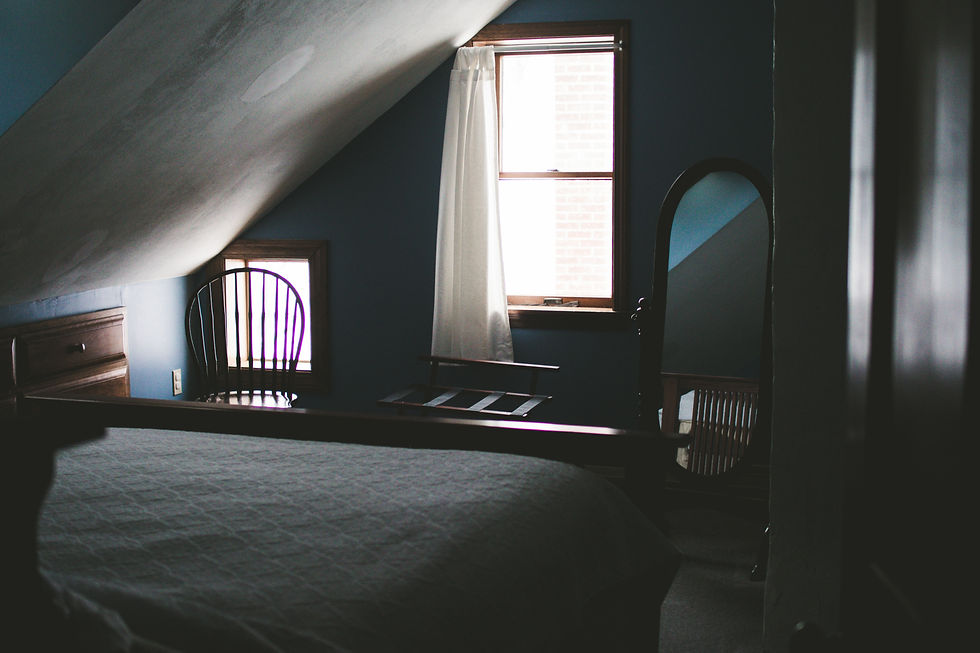
How did your morning start out today? Do you get enough sunlight first thing as you woke up? Well, that is what I would like to talk about today. So, I would like to ask that you pause for just a moment and notice/think about something simple yet profoundly important: Where is the light coming into your bedroom?
Natural light is a gift when you're dealing with seasonal depression. It can shift your mood, regulate your circadian rhythm, and genuinely change how your bedroom feels when you step into it. But, light is only helpful if it is actually there when you need it. And, that depends entirely on which wall your windows are on.
Let me explain: If your windows face north, you will get consistent, cool light throughout the day, but it won't have the warmth or intensity of southern or eastern light. A north facing room is predictable and gentle, but it may feel a bit flat during the darker months. Eastern light is my personal favorite for people struggling with seasonal depression. Morning sunlight floods in, those gold hour rays that naturally encourage wakefulness and reset your body's sense of time. That's powerful medicine. Southern light is bright and strong all day, though it can get harsh in summer. Western light is warm in the afternoon, but becomes late in the day, which doesn't help much if you're struggling to wake up in the mornings, especially in the winter.
The point isn't to judge your room or feel trapped by it. The point is to know what you're working with. If you have a north facing window, you're not starting from zero; you're just working with a different asset than someone with eastern exposure. As we move through these blog posts and start to discover some benefits to small changes in your bedroom, I hope you can glean some good information and tools to navigate and curate your own master bedroom. Essentially, we will build your room's layout around that. There is so much more to come.
In the meantime, take a moment right now. Which direction do your windows face? If you are not sure, you can use your phones compass app. Notice how the light moves through your room at different times of day, especially in the morning when seasonal depression often feels heaviest. There are four types of natural light that occur during a day.
Golden hour (morning and evening): occurs shortly after sunrise and before sunset; this light is soft, warm and casts long shadows
Midday/direct light: occurs when the sun is high in the sky. This light is neutral white, very intense and creates harsh, dark and strong contrast shadows.
Blue Hour (dawn/dusk): occurs just before sunrise and just after sunset. The sun is below the horizon, filling the sky with a cool, soft blue light
Diffused/overcast light: occurs when sunlight is scattered by clouds, fog, or shade. It is soft, low contrast, and produces very few shadows.
Understanding your light is the first step toward working with it instead of against it. You're not trying to fix your room; you're trying to befriend it. Knowing your directional light in your bedroom is just the beginning to making some beneficial changes to help you all year around, but especially in a season of depression.
Thank you for reading today. We are off to a really good start. I hope this brightened up your day today!
Until next time, have a great week, Jeanine
